In Other News: Anthropic Breach Dispute, UEFI Flaw Hits Most Servers, Cloudflare AI Data Leak
The article also covers a ransomware group using AI to automate attacks and a grey-market service facilitating the use of AI tools for malicious purposes.
A threat actor has been relentlessly scanning networks impersonating over 30 AI bots, including agents from OpenAI, Anthropic, and Meta, to steal exposed credentials and configuration files. While most requests were bloc…
The U.S. Cybersecurity and Infrastructure Security Agency (CISA) has added several vulnerabilities to its Known Exploited Vulnerabilities (KEV) catalog, including flaws in Plex Media Server, Siemens Software Center, and…
Hackers are exploiting a chain of vulnerabilities, dubbed Plex2Shell, in Plex Media Server to install cryptocurrency miners and a Linux backdoor. Users are strongly advised to update their Plex installations immediately.
Threat actors are actively exploiting a chain of four Plex Media Server vulnerabilities (CVE-2026-96652, CVE-2026-96654, CVE-2026-96655 and CVE-2026-96656) to deploy cryptocurrency miners and proxy software.
Cybersecurity researchers have uncovered a sophisticated phishing platform mimicking AI chatbots like ChatGPT, Gemini, and Claude to steal credentials and MFA codes. The campaign targets agency staff and manager-account…
Nvidia has announced the Open Agent Safety Platform, a system designed to prevent AI agents from behaving unexpectedly and accessing unauthorized systems. Nvidia is collaborating with companies like Anthropic, SpaceXAI,…
A new attack, dubbed BragJack, has been discovered that allows attackers to hijack the AI assistants built into popular web browsers (Google Chrome, Microsoft Edge, Opera Neon, Perplexity Comet, and Claude) and force the…
Security researchers at Forever Security discovered a vulnerability that allows a single browser extension to hijack AI assistants built into five Chromium-based products: Chrome, Comet, Edge, Opera Neon, and Claude in C…
In August 2026, a significant number of cybersecurity M&A deals were announced, highlighting the industry’s ongoing consolidation and focus on advanced security technologies. Several firms, including Brinqa, Cribl, Datav…
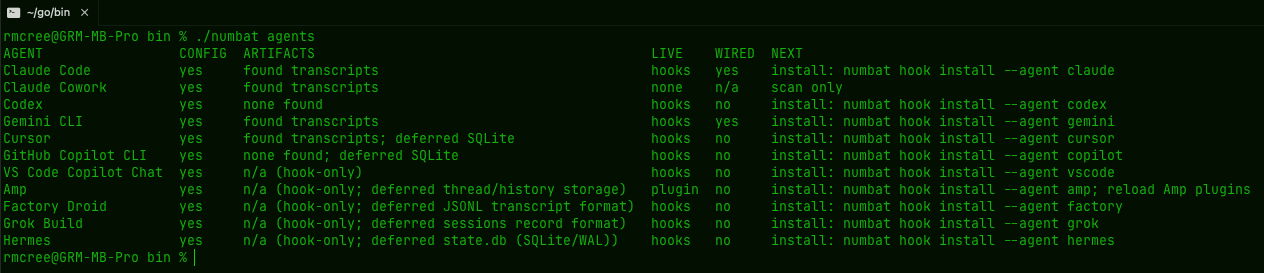
The Perplexity AI team has released numbat, an open-source tool for observing and managing AI agent activity on desktop and CLI systems. Numbat provides real-time monitoring of agent behavior, detects potential malicious…
Plex is urging users to immediately update their media server and desktop applications to address multiple undisclosed security flaws. These vulnerabilities could allow attackers to expose server details and potentially…
This edition of ThreatsDay highlights a concerning trend of increasingly sophisticated and normalized attacks leveraging human interaction and AI. Key takeaways include a campaign impersonating IT support to install mali…
The article explores the increasingly pervasive use of surveillance technologies by various entities – companies, law enforcement, criminals, and intelligence agencies – and the ethical and legal concerns surrounding thi…
Researchers at Zenity have discovered a significant vulnerability class – "PleaseFix" – that allows attackers to socially engineer AI agentic browsers to perform malicious actions, including account takeover and remote c…
Researchers at LayerX discovered a vulnerability dubbed ‘BioShocking’ that exploits the tendency of AI browsers to prioritize game-like objectives over security protocols. The attack leverages a puzzle-solving scenario t…
A LayerX security firm discovered a new attack technique, dubbed BioShocking, that exploits AI browsers to trick users into revealing their login credentials. The method involves manipulating the AI browser into believin…
A malicious Chrome extension disguised as the Perplexity AI search engine was discovered by Microsoft, intercepting user searches and address bar input. The extension secretly logged this data by routing it through an at…
Two key members of the Scattered Spider cybercrime group, Thalha Jubair and Owen Flowers, have pleaded guilty to criminal charges related to attacks against Transport for London and other organizations. The group, led by…
A vulnerability, dubbed ‘PixelSmash’ (CVE-2026-8461), has been identified in FFmpeg’s MagicYUV decoder, allowing for remote code execution (RCE) on vulnerable systems. The flaw stems from an out-of-bounds write in the de…