

EU chief wants joint response to cyberattacks, sabotage
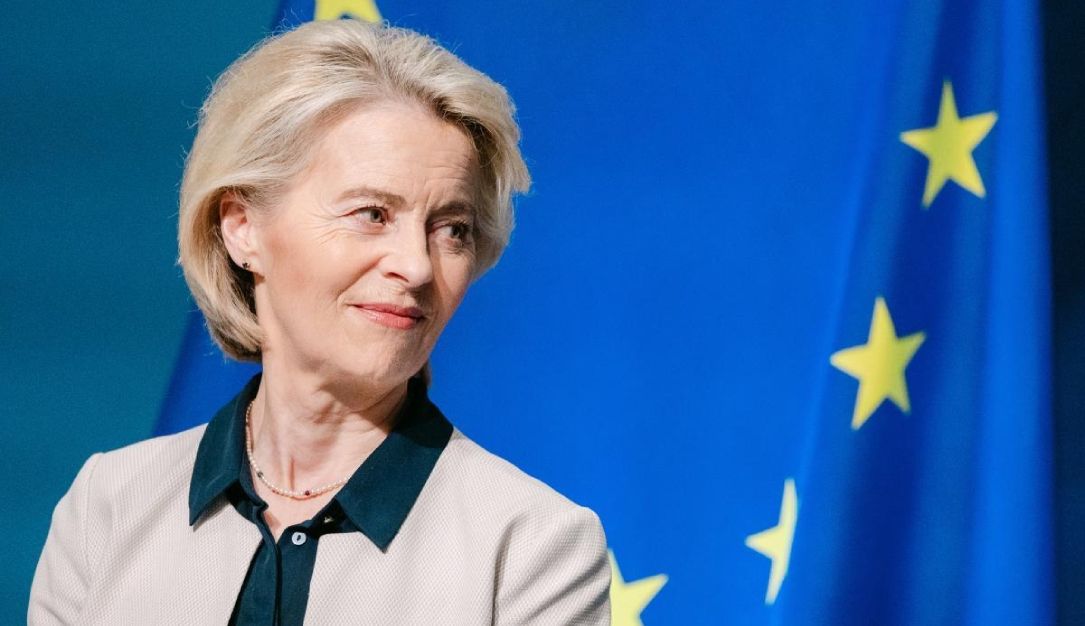
European Commission President Ursula von der Leyen proposed a new EU mechanism to enable any member state to trigger a coordinated response to security threats, including cyberattacks, sabotage, and drone incursions. This proposal, modeled after NATO's Article 4, aims to address escalating hybrid threats and improve the EU's ability to respond to incidents beyond the level of armed aggression. The initiative is part of a broader push for a strengthened European security strategy and investment in capabilities like air and missile defense.
European Commission President Ursula von der Leyen proposed a new EU mechanism designed to enhance the bloc’s response to a growing range of security threats. The proposal, unveiled during her annual State of the Union address, would allow any EU member state to summon all 27 governments in response to incidents such as cyberattacks, sabotage, and drone incursions. This mechanism is intended to address what von der Leyen described as ‘mounting threats on our soil,’ citing recent incidents in Denmark, Lithuania, and Poland, as well as an attempted drone attack in Leipzig.
The proposal is modeled on NATO’s Article 4, which allows members to consult when the territorial integrity, political independence, or security of a member is threatened. It is distinct from Article 5, the alliance’s collective-defence clause. The EU already has its own mutual-assistance provision, Article 42(7) of the Treaty on European Union, which France invoked after the Paris terrorist attacks in November 2015.
However, reaching consensus within the EU remains a challenge, as evidenced by this week’s failure of EU ambassadors to approve the routine six-month renewal of sanctions on Russia. France and Slovakia were pushing for the removal of Russian-Uzbek billionaire Alisher Usmanov from the sanctions list, highlighting the difficulties in achieving unanimous agreement on security matters.
The EU’s common foreign and security policy often requires unanimity, and EU sanctions are adopted unanimously, further complicating the process of developing and implementing a coordinated response. Von der Leyen did not specify whether the proposed protocol would alter existing decision-making rules or establish agreed responses in advance, only that it would provide a new framework for consultation.
As part of a wider security initiative, the Commission will also set out plans for a European Security Council, bringing together EU leaders with partners including Britain, Canada, Norway, and Ukraine to discuss continental security. The Commission will also announce a European Instrument for Strategic Enablers, intended to support capabilities including air and missile defence, strategic transport, air-to-air refuelling, space systems, and cyber capabilities, aligning with NATO’s efforts.